
Inline measurement technology based on optical imaging and real-time image analysis. This technology can be applied to suspensions including for example particles, crystals, droplets or bubbles as the dispersed phase. The real-time analysis of the properties of the suspensions is the key to controlling and optimizing the processes.
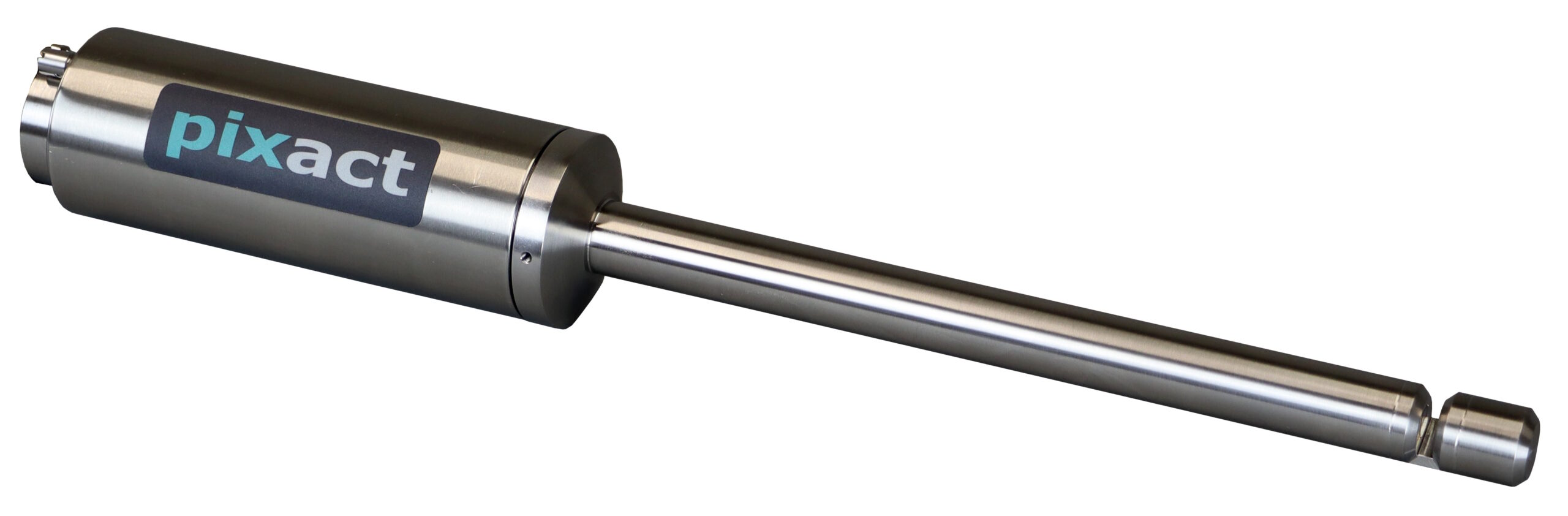
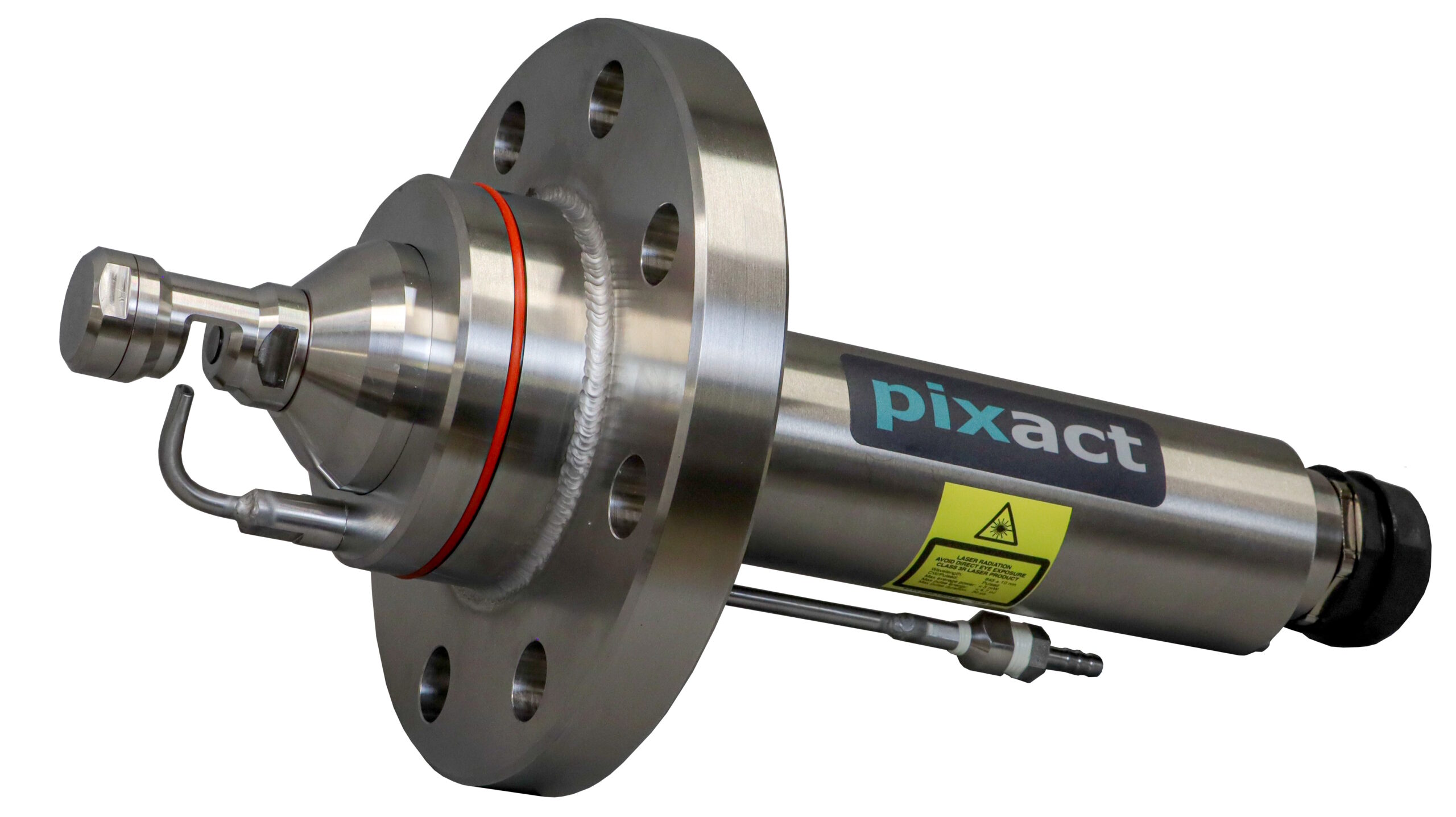
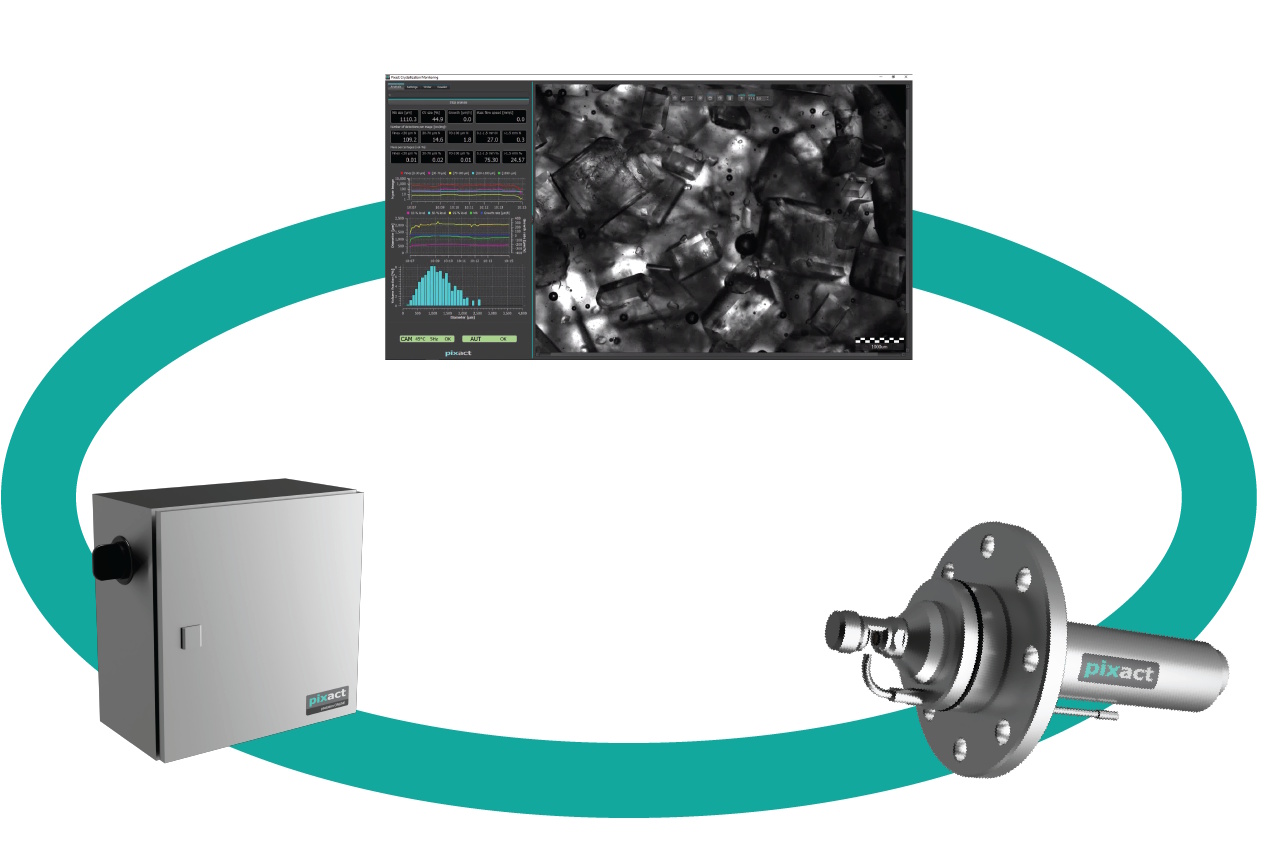
Measurement systems are based on the direct optical imaging of process suspensions in pipelines, reactors, and tanks. The image acquisition is followed by image analysis with proprietary algorithms to detect dispersed phase elements, such as particles, bubbles and crystals. As a result, detailed statistics for these elements, including size, shape, velocity, and color are obtained. Measurement systems consist of a Pixscope imaging unit and a Pixstation main unit running the Pixact measurement software.
- Superior image quality even in high color and dense crystal suspensions.
- Real-time crystal sizing from the seeding phase until the end of the batch.
- Batchwise report of the measurement results in Excel or csv format.
- Transmission of the measurement results to the factory DCS (e.g. mA, Profinet, Modbus-TCP or OPCUA).
- Fully configurable user interface and data reporting.
- Robust imaging unit without any moving parts, equipped with automatically operating washing nozzle.
With this technology you can increase the yield and capacity of your process and minimize quality variations in the final product.
R&D activities in laboratory and pilot scale
- Understanding fundamental process phenomena and reaction mechanisms;
- Acquiring detailed measurement data supporting the development of new formulations, recipes, and processes;
- Analysis of manually collected samples;
- Using the same tools from the laboratory to pilotscale streamlines in scale-up work;
- Producing detailed measurement data to optimize process parameters and control schemes.
Production and mill scale
- Visual examination of the process suspension with a live camera view;
- Providing detailed, real-time measurement data for process control;
- Replacing manual sampling and analysis procedures in quality control;
- Analysing process variations with online measurements;
- Documenting and reporting of the production quality;
- Benchmarking recipes, reactors, process lines, sites, etc. to promote Best Practice Methods;
- Providing means for troubleshooting;
- Collection a production database to help with troubleshooting in case of disturbances.
APPLICATIONS
Crystals
- Analyze the seeding phase.
- Follow and control crystal growth.
- Indicate spontaneous nucleation.
- Measure the final crystal size distribution.
Particles
- Analyze the properties of the particles (size, shape and color).
- Classify particles based on their visual properties.
Bubbles
- Measure bubble size distribution.
- Analyze suspension homogeneity.
- Optimize gas dispersion (foaming/anti-foaming agent dosage, mixing and gas feed).
Droplets
- Measure droplet size distribution.
- Optimize and control process parameters (such as temperature, pressure and mixing energy) and chemical dosages.
Bioprocess
- Analyze the size and morphology of cells, such as fungi filaments.
- Estimate the homogeneity and structure of the suspension.
- Measure bubble size distribution in the reactor.
The imaging unit flange type and probe wet length are customizable, allowing installation for a variety of industrial process equipment. Below are presented some typical installation options, but the designs are fully customizable. The imaging unit can also be equipped with a washing nozzle to flush the measurement gap when needed.
Preferred installation location for the Pixscope imaging unit is a flange on the reactor or tank side wall. Longer version of Pixscope can be built to install on a flange on top of the reactor. The imaging unit can also be equipped with a washing nozzle to flush the measurement gap when needed.
Brochure:
More information on manufacturer`s website:
| Supplier |
|---|
If you have any questions please don`t hesitate to contact Thurne specialist directly:
Thurne Baltic

Phone number
Direct phone: +371 6616 3763 Mobile phone: +371 2689 6799Thurne Denmark

Thurne Finland

Phone number
Mobile phone: +358 50 518 8706Thurne Sweden, Norway

Phone number
Direct phone: +46 8 5576 9332 Mobile phone: +46 709 535 018Thurne Poland